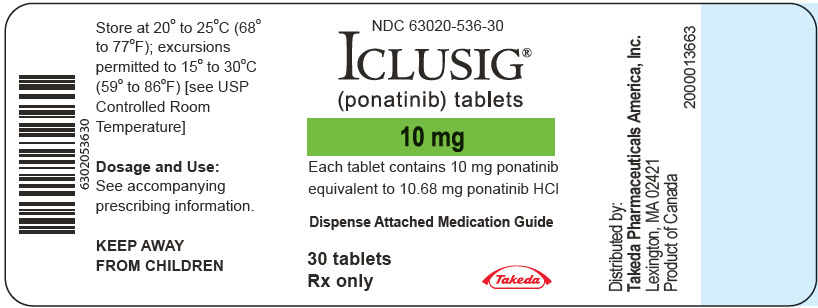
Iclusig
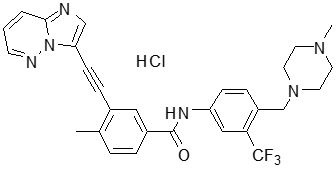
What is Iclusig (Ponatinib)?
Top Global Experts


Related Clinical Trials
Summary: The purpose of this study is to evaluate the safety, tolerability, pharmacokinetics, and efficacy of ponatinib in children aged 1 to \< 18 years with advanced leukemias, lymphomas, and solid tumors.
Summary: This phase III trial compares the effect of usual treatment of chemotherapy and steroids and a tyrosine kinase inhibitor (TKI) to the same treatment plus blinatumomab. Blinatumomab is a Bi-specific T-Cell Engager ('BiTE') that may interfere with the ability of cancer cells to grow and spread. The information gained from this study may help researchers determine if combination therapy with steroids...
Summary: This phase II trial studies how well ponatinib hydrochloride works as second line therapy in treating patients with chronic myeloid leukemia in chronic phase that has not responded to initial treatment (first line) with imatinib mesylate, dasatinib, or nilotinib or cannot tolerate imatinib mesylate, dasatinib, or nilotinib. Ponatinib hydrochloride may stop or control the growth of cancer cells by ...
Related Latest Advances
Brand Information
- Newly diagnosed Ph+ ALL in combination with chemotherapy.
- As monotherapy in Ph+ ALL for whom no other kinase inhibitors are indicated or T315I-positive Ph+ ALL.
- Chronic phase (CP) CML with resistance or intolerance to at least two prior kinase inhibitors.
- Accelerated phase (AP) or blast phase (BP) CML for whom no other kinase inhibitors are indicated.
- T315I-positive CML (chronic phase, accelerated phase, or blast phase).
- 10 mg of ponatinib: Oval, white to off-white, biconvex, debossed "NZ" on one side and plain on the other side
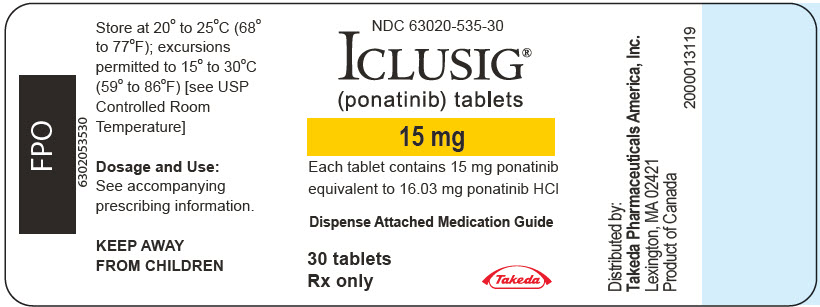
- 15 mg of ponatinib: Round, white, biconvex, debossed "A5" on one side and plain on the other side
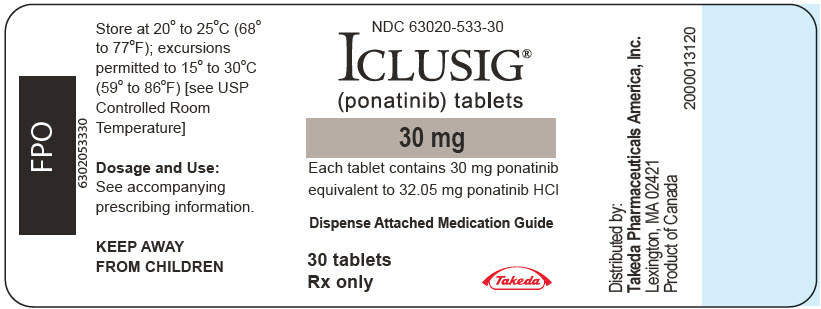
- 30 mg of ponatinib: Round, white, biconvex, debossed "C7" on one side and plain on the other side
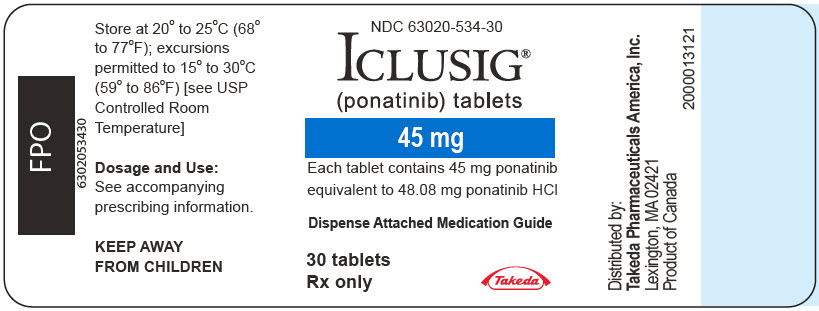
- 45 mg of ponatinib: Round, white, biconvex, debossed "AP4" on one side and plain on the other side
- Arterial Occlusive Events
- Venous Thromboembolic Events
- Heart Failure
- Hepatotoxicity
- Hypertension
- Pancreatitis
- Neuropathy
- Ocular Toxicity
- Hemorrhage
- Fluid Retention
- Cardiac Arrhythmias
- Myelosuppression
- Tumor Lysis Syndrome
- Reversible Posterior Leukoencephalopathy Syndrome
- Impaired Wound Healing and Gastrointestinal Perforation